
Global History of Tattooing: Archaeology, Culture, Technology, and Modern Transformations
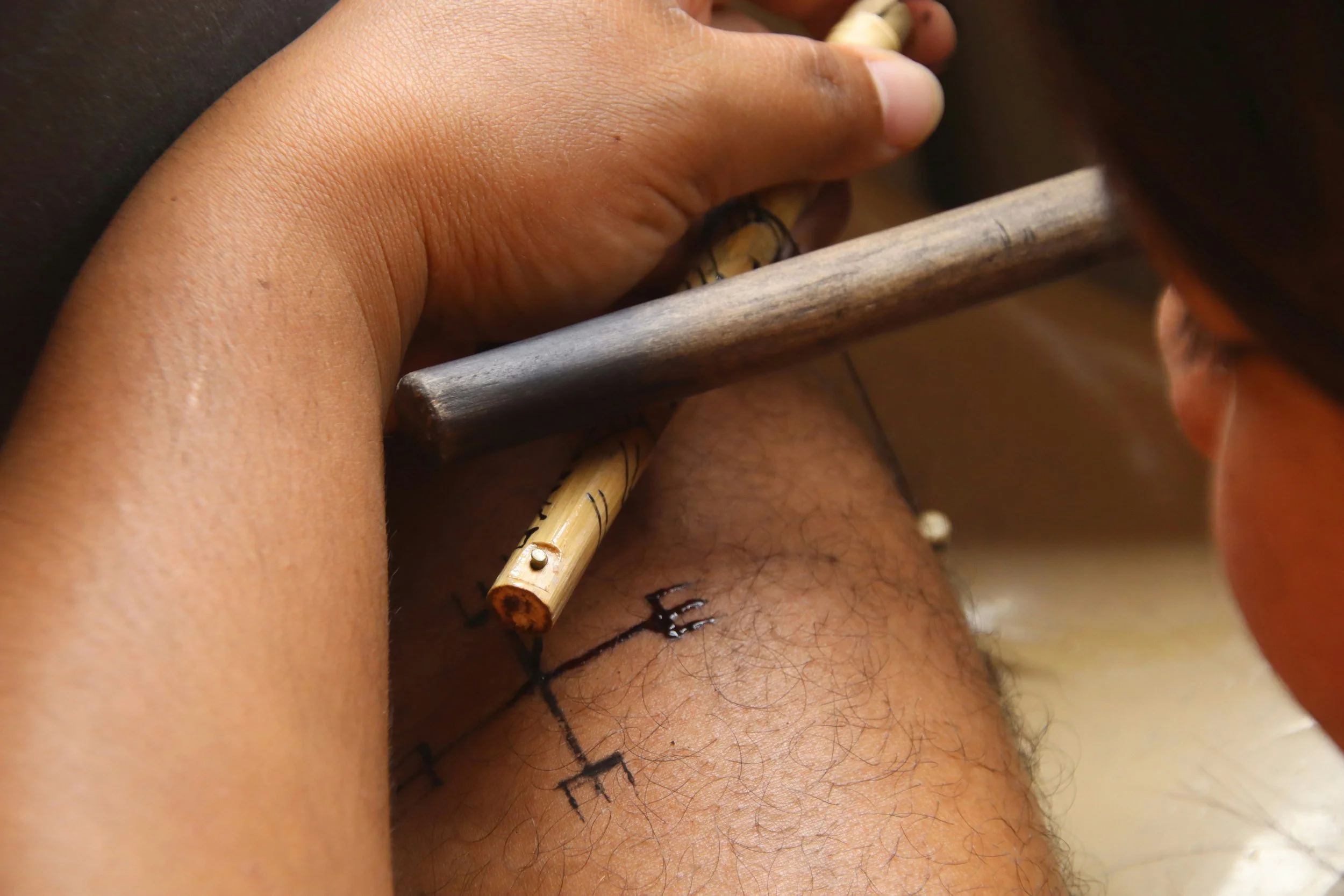
Tattooing is one of humanity’s most widespread and long-lived body technologies, but its early history is unevenly visible because human skin rarely survives in the archaeological record. The strongest evidence for the deep antiquity of tattooing comes from naturally or intentionally mummified bodies and ice-preserved burials, where pigment can be directly observed rather than inferred. The current scholarly consensus is that the oldest confirmed tattoos belong to Ötzi the Iceman (radiocarbon dated c. 3370–3100 BCE), whose many linear and cross-shaped marks were likely made by incising skin and rubbing in carbon-based pigment. Nearly contemporaneous, infrared imaging has revealed figural tattoos on Predynastic mummies from Egypt (c. 3351–3017 BCE), demonstrating that early tattooing was both geographically widespread and stylistically diverse by the late fourth millennium BCE.
Across regions, tattoos have served recurring cultural roles—ritual initiation, social rank, spiritual protection, punishment and stigmatization, healing, and identity—yet the meanings and ethics of designs are radically local (for example, some Indigenous tattoo traditions explicitly warn against appropriation by outsiders). The global story is also a technological one: tattooing moved from stone/bone/thorn tools and soot-based pigments to industrial needles, standardized inks, and—after the late nineteenth century—electric machines derived from earlier engraving/duplicating devices. In the modern era, legal and social perceptions have oscillated between prohibition (often framed through public order, religion, or public health), association with criminality, and later mainstream acceptance—shaped by regulation, professionalization, media, and now social platforms.
Assumption noted (as requested): inline citations in the narrative use author–year style (e.g., “Friedman et al., 2018”), while evidence links are provided via the source list at the end.
Origins and archaeological record
The “origin” of tattooing cannot be reduced to a single birthplace. A more defensible historical approach is to separate: (a) direct evidence (tattoos preserved in skin), (b) indirect evidence (tools with pigment residues, iconography that plausibly depicts tattooing), and (c) textual/ethnohistorical evidence (descriptions of tattooing practices). Archaeology strongly favors (a), because it is the least ambiguous; however, it is also geographically biased toward environments that preserve bodies (ice, deserts, arid caves, waterlogged context). Deter-Wolf and colleagues emphasize that even where tattooing was common, it may leave few recoverable traces, so absence of evidence is not evidence of absence.
Europe and North Africa: the earliest confirmed tattoos
The best-known early case is Ötzi the Iceman, conserved and displayed by the South Tyrol Museum of Archaeology in Italy. The museum reports 61 tattoos consisting of lines and crosses, located near joints and the spine; crucially, they note these were not made with a modern puncturing needle but via fine incisions into which pulverized charcoal was rubbed. A central interpretive debate concerns function: because many marks align with zones of degenerative joint changes, researchers have proposed therapeutic intent (sometimes analogized to later acupuncture-like points), but this remains an inference rather than a provable “medical tattoo” diagnosis.
In Egypt, Friedman et al. (2018) used infrared imaging on Predynastic “Gebelein” mummies held by the British Museum, identifying figural and geometric motifs (including animals) and radiocarbon dating hair samples to c. 3351–3017 BCE. The importance here is analytical: Egyptian evidence shows that tattooing very early included recognizable images, not only abstract lines, challenging narratives that assume figural tattooing is “modern.” (Friedman et al., 2018)
The Americas: early tattoos and the problem of misdated “world’s oldest” claims
The oldest direct evidence of tattooing in the Americas is commonly associated with a Chinchorro-context mummy (from northern Chilean coastal archaeology) bearing a small mustache-like dotted tattoo. A major scholarly correction in the last decade was not the discovery of new tattoos, but the repair of a dating error that had circulated for years. Deter-Wolf et al. (2016) traced how “6000 BP” was mistakenly transformed into “6000 BC” in some secondary reporting—artificially adding ~4000 years—and reaffirmed that Ötzi is older than the tattooed Chinchorro individual. (Deter-Wolf et al., 2016)
Because the Chinchorro tattoo story illustrates how easily public claims drift from radiocarbon conventions, it is a useful cautionary example: even in tattoo history, the key analytical work is often source criticism (what exactly was dated, in what units, and how it was later paraphrased).
Beyond mummies, archaeology has also identified ancient tattooing tools in North America: Gillreath-Brown et al. (2019) report a cactus-spine implement with pigment staining, pushing back direct evidence for tattoo toolkits in the U.S. Southwest by roughly a millennium relative to earlier assumptions. (Gillreath-Brown et al., 2019)
Oceania: tool-based archaeology and continuity of technique
In Oceania, direct tattooed skin is rare archaeologically, but tool evidence is unusually strong. Clark and Langley (2020) used AMS dating and traceological analysis on multi-toothed bone tattooing combs from Tonga, concluding the tools are ~2700 years old and represent the oldest confirmed multi-toothed tattooing implements in the Pacific. (Clark & Langley, 2020) This matters because the comb-and-mallet technology is central to many Polynesian traditions; archaeology thus supports not only antiquity but also technical continuity over millennia.
Iron Age Eurasia and early Japan: preserved skin, imaging, and contested iconography
Iron Age frozen burials in Siberia provide another window into ancient tattooing. Caspari et al. (2025) applied high-resolution near-infrared imaging and photogrammetry to Pazyryk tattoos, arguing that improved documentation reveals overlaps, workflow cues, and variations consistent with differing skill levels or even multiple tattooists. (Caspari et al., 2025) This is analytically significant for two reasons: it treats tattooing as a craft practice with observable “handwriting,” and it demonstrates how imaging technologies can change historical interpretation without any new excavation.
In Japan, the earliest “evidence” is often asserted via Jōmon figurines (dogū) with incised facial/body patterns; however, whether these marks represent tattoos, paint, clothing, or other body decoration remains debated, and responsible accounts should label this as uncertain. More reliable are later textual references (e.g., Chinese accounts describing body marking among the people called “Wa”), but these too require careful philological handling; many modern summaries confidently assign protective or rank-related meanings that go beyond what non-specialist sources can firmly prove.
Timeline of major milestones
The timeline below emphasizes milestones that reshape what historians can argue (new kind of evidence, new tool, new legal regime), not merely “popular moments.”
Tattoo History Timeline
c. 3370–3100 BCE — Alpine Europe
Oldest confirmed tattoos on Ötzi; lines and crosses made through incision plus charcoal rubbing; possible therapeutic use.
c. 3351–3017 BCE — Predynastic Egypt
Early figural tattoos appear on the Gebelein mummies, showing pictorial tattooing across sexes.
c. 1880 ± 100 BCE — Chile / Andes
Oldest confirmed tattoos in the Americas, often described as the Chinchorro “mustache.”
1st millennium BCE — Mediterranean Europe
Tattooing used to mark outsiders, enslaved people, and punishment; mostly documented through texts.
~700 BCE — West Polynesia
Earliest multi-toothed tattoo combs, showing advanced early tattooing technology.
Early Iron Age — Siberia / Altai
Imaging reveals tattoo workflow and suggests specialized tattoo artists.
1658 — Holy Land
Pilgrimage tattoos documented in Western accounts.
1769 — Pacific–Europe
The word “tattoo” enters the English language through Polynesian contact.
1871–1872 — Japan
Government policies restrict tattooing and contribute to long-term stigma.
1876–1891 — US / Europe
Electric tattooing develops from industrial-era technology.
1891 — United States
The electric tattoo machine is patented, transforming tattooing.
1948 — Japan
Tattooing is legalized after World War II, though stigma remains.
1976 — United States
One of the first tattoo conventions takes place in Houston.
1983 — Global
Laser tattoo removal becomes available, changing the permanence of tattoos.
2011–2012 — United States
Health investigations highlight risks related to contaminated tattoo ink.
2022 — Europe
New regulations limit chemicals in tattoo inks under EU REACH laws.
2020s — Global
Social media transforms how tattoos are discovered and shared.
Tattoos as social and cultural practice across regions
Tattooing is best understood not as “body decoration” alone, but as social infrastructure on skin—a way communities store information about belonging, life transitions, sacred commitments, and stigma. Across cultures, tattoos often do what writing does: they preserve durable signals in contexts where literacy may not be central, where the body is the main public interface, or where identity must be readable at a glance.
Polynesia and New Zealand: rank, rites, genealogy, and the ethics of meaning
Polynesian tatou/tatau traditions are frequently described as a “language” of motifs that communicate genealogy, maturity, and rank. While the metaphor of tattooing as writing can be overstated, museum documentation supports that the process and ceremony often matter as much as the final design.
In Māori contexts (Aotearoa/New Zealand), tā moko has historically functioned as a deeply encoded marker of whakapapa (genealogy), authority, and personal history. A key material feature is tool-specific: Te Papa documentation highlights uhi (chisels) used for moko, and explains that metal gradually replaced bone in the contact period (by the 1840s), which reshaped the process and aesthetics.
Crucially, contemporary Indigenous institutions also insist on ethical boundaries. The Anchorage Museum states explicitly that traditional Inuit tattoos signify cultural belonging and are not intended for appropriation by those outside the culture—an important reminder that “global appreciation” can easily become extraction.
Japan: punishment, artistry, and stigma as historical residue
A recurring pattern in tattoo history is the same technology being used for opposite social purposes: to honor and to degrade. In Japan, tattooing includes histories of penal marking as well as later decorative mastery intertwined with ukiyo-e aesthetics and urban popular culture. University-based interpretive exhibits describe a national ban in 1872 and emphasize how postwar legalization (1948) did not dissolve the association with criminality (notably via yakuza stereotypes).
Academic work also stresses the broader cultural politics: Yamada (2009) analyzes tattooing in contemporary Japan as a site of “westernization” and “cultural resistance,” noting competing pressures between global tattoo markets and local stigma. (Yamada, 2009) Studies of bathing culture highlight how tattoo stigma is reproduced through everyday exclusions (e.g., bans in communal bathing spaces), illustrating that “law” is only one layer—social practice can function as a quasi-regulatory system.
Europe: from classical stigmas to sailors and aristocrats
European tattoo histories are often presented as a simple arc: “ancient stigma → sailor tradition → modern mainstream.” That arc contains truth, but it conceals discontinuities. In classical Mediterranean contexts, tattoos could mark enslaved people, prisoners, or outsiders—what matters analytically is that tattooing could be a coercive inscription by authorities, not an autonomous identity project. Broad syntheses in archaeological scholarship treat these “stigmatic” functions as part of the ancient repertoire of body modification.
In later centuries, European tattooing also intersected with elite fashion and travel. Museum narratives show that the nineteenth century included tattooing among royalty and aristocracy, including tattoos acquired through travel and cross-cultural contact (including travel to Japan). This complicates the stereotype that tattoos were only a working-class or criminal marker; at times they were also a cosmopolitan trophy and a sign of imperial mobility.
Africa: ancient Nile tattooing, Amazigh identity marks, and the scarification boundary
In North Africa, Predynastic Egyptian tattoos (Friedman et al., 2018) supply some of the world’s earliest figural evidence. Later archaeological and philological work on Egypt and Nubia argues that tattooing appears in diverse contexts (including possible therapeutic and protective uses), but interpretation always risks projecting modern categories onto ancient bodies.
In Amazigh (Berber) communities, facial and hand tattoos have historically operated as gendered identity markers and as protective/beautifying signs within local cosmologies. Becker’s work on Amazigh women’s arts treats tattooing as one component of a broader visual system of identity-making, embedded in women’s creative labor and social authority. (Becker, 2006/2007) Modern declines are widely linked to a mix of modernization, migration, colonial devaluation, and religious condemnation; Mesouani’s thesis frames tattooing as a contested practice in relation to Islam and national identity in Morocco. (Mesouani, 2019) Because these accounts often rely on interviews and memory, dates and causal weights should be treated as interpretive rather than strictly measurable.
A critical analytical point for Africa is the category problem: outsiders often conflate tattooing (pigment in skin) with scarification (raised scars), yet communities may treat them as distinct. The Pitt Rivers Museum explains scarification as both beautification and identity marking, emphasizing life-stage and group signals that are legible in scar pattern and placement. This matters because “global tattoo history” must avoid collapsing different embodied practices into a single Western label.
The Americas: Indigenous persistence, colonial suppression, and revival
In the Americas, tattooing has been documented ethnographically and historically across many Indigenous nations, but direct archaeological survival varies. Deter-Wolf & Peres (2013) highlight how ethnohistorical accounts, experimental archaeology, and microscopy can identify ancient North American tattoo tools and demonstrate multi-millennial continuity even where tattooed skin itself rarely preserves.
In circumpolar North America, Inuit tattooing (including skin-stitch methods using soot-based pigment) has historically been produced by women for women, tied to rites of passage and life events. The Anchorage Museum’s public scholarship foregrounds both meaning and ethical constraints (non-appropriation). Revitalization projects and cultural education around Inuit tattooing further show how tattooing can operate as a modern sovereignty practice—reasserting identity in the wake of assimilation policies.
Southeast Asia: sacred protection and the politics of “authenticity”
Southeast Asian tattooing includes sacred tattoo traditions in Thailand (often discussed under “sak yant”), where ritual speech, blessing, and moral codes can be as central as the design. Contemporary ethnographic and social-scientific work emphasizes that sak yant practice cannot be reduced to aesthetics; it is embedded in religious authority, devotion, and embodied discipline. (Jerrentrup, 2024)
In the Philippine Cordillera, traditional tattooing (batok) historically related to community status, life achievements, and (in some groups) headhunting histories; modern scholarship analyzes how tourism and global attention can commodify tradition while also catalyzing heritage revival. (Soukup, 2021; Zafra, n.d.) Analytically, this is a classic heritage dilemma: global visibility can both protect and distort practice, depending on who controls narrative and who gets to benefit.
Middle East: pilgrimage tattoos, Coptic identity marks, and religious constraints
In the Middle East, tattooing intersects strongly with religion—both through prohibition and through devotional marking. A widely cited scriptural anchor for Jewish and later Christian debates is Leviticus 19:28, which bans certain forms of cutting/marking associated with mourning; JSTOR’s synthesis underscores that context matters and that the verse’s meaning has been debated in scholarship rather than universally settled.
At the same time, Christian tattoo traditions in the region are not modern inventions. Meinardus (1972) documents Coptic tattooing as a system of identification among Egyptian Christians, while Carswell’s classic study compiles Coptic tattoo designs and links them to pilgrimage and devotional practice. (Meinardus, 1972; Carswell, 1958)
Pilgrimage tattooing is especially well documented in Jerusalem at Razzouk Tattoo, where ethnographic work describes the use of historic stamp blocks and the tattoo as a corporeal “certificate” of pilgrimage. (Diktaş, 2020) Scholarship also notes that by the mid-seventeenth century (1658) Western Christians had already adopted an “oriental tradition” of pilgrimage tattooing for centuries, indicating older roots that predate surviving European descriptions.
Technology, materials, and methods
Tattooing is a simple idea—put pigment under skin—but it is technically difficult in practice because it requires controlled wounding, stable pigments, and infection management. Across time, its technological evolution has reflected broader shifts in materials science, mechanics, and medicine.
Prehistoric and traditional tool ecologies
Ancient tattooing methods include incision (cut + rub pigment), puncture with single points (hand-poke), puncture with multiple points (combs), and subdermal insertion techniques—each producing distinct visual and textural outcomes. Experimental archaeology comparing pre-electric tools (bone, obsidian, copper, tusk) demonstrates that multiple tool types can create durable tattoos and that method/tool choice alters line quality and healing. (Deter-Wolf et al., 2022)
Materially, many traditions converged on carbon black pigments—charcoal or soot—because they are relatively stable and visually strong. For example, the South Tyrol museum explicitly describes Ötzi’s pigment as pulverized charcoal rubbed into incisions. In Polynesian practice, museum documentation describes blue-black dye derived from candlenut soot, with combs pressed into skin using a mallet.
From handwork to electric power: the nineteenth-century machine turn

The late nineteenth century marks a structural break: tattooing became faster, less physically exhausting for artists, and more scalable. The Smithsonian Institution explains that electric tattooing emerged by adapting Thomas Edison’s electric pen design; Samuel O'Reilly created a tattoo machine with a reciprocating motor powering a needle. The Smithsonian American Art Museum collection similarly frames 1891 electric tattooing as a key innovation for portability and speed, aligning with the itinerant, port-based tattoo economy of the era.
Analytically, electric machines did more than speed up tattooing: they also supported new styles (denser fill, repeatable flash), changed shop economics, and helped shift tattooing toward a recognizable profession—especially as equipment became standardized and commercially distributed.
Pigments, regulation, and modern ink chemistry
Modern inks are chemically complex mixtures rather than simple soot. This has created new risks (allergic reactions, contaminants) and new regulatory responses. The European Commission notes that, as of 2022, EU restrictions apply to hazardous chemicals in tattoo inks and permanent makeup, covering carcinogens, mutagens, reproductive toxins, sensitizers/irritants, certain pigments, and impurities. National regulators summarize this as a compliance requirement under EU legislation for tattoo inks and PMU.
Legal, religious, and social shifts
Tattooing’s social meaning has repeatedly been shaped by institutions—religious authorities, states, medicine, and media—often in conflict with practitioners’ own understandings.
Religion: prohibition, exception, and devotional marking
The Leviticus 19:28 prohibition is often treated publicly as a blanket ban, but scholarly discussion emphasizes interpretive nuance: the verse is embedded in a context of mourning-related practices, and debates continue about whether it targets tattooing specifically, branding, or a broader set of ritual marks. Meanwhile, Middle Eastern Christian traditions show that some communities used tattooing precisely as identity and devotion—Coptic crosses as marks of belonging and endurance. (Meinardus, 1972)
The critical analytic lesson is that “religion vs tattooing” is not a binary; different religious communities have used body marking both to enforce boundaries and to express faith.
State power: bans, stigma, and assimilation
In Japan, official bans in the modern state era are widely cited as contributing to durable stigma, even after formal legalization. Assimilation policy also targeted Indigenous tattoo traditions: official cultural programming notes that Ainu women’s traditional tattooing was legally prohibited in 1871 as part of coercive integration into a “Japanese lifestyle,” contributing to decline.
In Europe and North America, tattoo regulation frequently passed through public health frames. Municipal public health manuals (e.g., New York City’s infection control guidance) illustrate how contemporary governance focuses less on banning and more on standardizing safe practice—disposal, sterilization, and infection prevention rules.
Criminalization and “deviance” narratives
A major turning point in Western stigma discourse was late nineteenth-century criminology. Cesare Lombroso and his followers treated tattoos as markers of atavism and criminality, building collections and classification systems that influenced public imagination and policing. Contemporary scholarship revisits these histories to show how “scientific” narratives can launder cultural prejudice into apparent evidence.
Mainstreaming as a managed transformation
Mainstream acceptance did not happen simply because more people got tattoos; it also involved the reframing of tattooing as art, the building of professional organizations, and the softening of class-coded stigma. Margo DeMello analyzes how since the 1980s tattooing re-emerged as widely appealing in the United States, in part through the production of “professional” meanings that downplayed older working-class associations. (DeMello, 2000)
In Europe, regulatory debates about inks (REACH) and workplace norms show that mainstreaming is not total; tattoos can remain grounds for discrimination or exclusion even when common.
Movements and artists in the modern tattoo renaissance
A “global history of tattooing” must explain not only where tattooing existed, but how specific movements formed the modern global industry—especially through cross-cultural exchange, travel, and media.
American traditional and the rise of professional networks
Twentieth-century American tattooing was shaped by maritime and military mobility, port economies, and standardized “flash” designs. The Smithsonian’s discussion of electric tattooing highlights how the machine’s portability suited early American markets along coastal travel routes.
The late twentieth century brought infrastructure: conventions, equipment markets, magazines, and later digital platforms. Journalism and local histories commonly identify the 1976 Houston convention as an early “first recorded” tattoo convention, signaling a move toward public professionalization and community-building.
Key artists as cultural intermediaries
A small number of highly visible artists became intermediaries between subculture and mainstream. The Smithsonian documents the Lyle Tuttle collection as a major archive of machines, flash, and ephemera—important because archives determine what histories can later be written.
Sailor Jerry is often credited not only with iconic imagery but also with technical and hygienic innovation. An American Institute for Conservation paper (“True Love Forever”) discusses preservation of his legacy and describes him as elevating tattooing toward fine art while engaging deeply with tools and technique. (Sheesley, 2012) Although popular accounts vary in specific invention claims, the scholarly importance is that his practice illustrates a mid-century shift toward higher technical standards and a self-conscious professional identity.
Don Ed Hardy is frequently positioned as a central figure in the late twentieth-century tattoo “renaissance,” especially via studied engagement with Japanese aesthetics and the repositioning of tattooing as art rather than mere trade. Academic work on American tattoo art notes how artists like Hardy helped transform cultural status by bringing fine-art training and international stylistic exchange into tattoo practice.
In Japanese tattooing, individual masters became global reference points for irezumi aesthetics. For instance, interviews and cultural reporting frequently identify Horiyoshi III as influential; while interviews are not peer-reviewed evidence of broad historical claims, they are valuable for documenting practitioners’ self-understandings and transmission pathways. For interpretive framing, academic discussion of irezumi emphasizes its entanglement with visual culture (ukiyo-e) and modernity, rather than treating it as a timeless “tradition.”
Health, safety, and contemporary trends
Modern tattooing is characterized by a tension: it is a mass-market aesthetic practice that still involves controlled wounding, pigment deposition, and long-term immune interaction.
Ink reactions and long-term complications
Dermatology literature documents a wide range of adverse reactions, including allergy/hypersensitivity, granulomatous reactions, and immune-mediated phenomena. Recent open-access reviews synthesize how reactions can be chronic and pigment-specific and how management often requires specialized dermatologic evaluation. The growth of chemical regulation (e.g., REACH) can be read as a structural response to this medical knowledge: tattooing moved from folk practice to regulated consumer product domain.
Tattoo removal: making permanence optional
Tattoo removal has reshaped tattoo culture by weakening the “irreversibility” barrier that historically made tattoos socially consequential. Clinical reviews note that the first commercially available Q-switched laser for tattoo removal appeared in 1983, followed by other Q-switched systems; selective photothermolysis (early 1980s) is the conceptual basis enabling targeted pigment disruption with limited collateral damage. (Ho et al., 2015; Kilmer, 1997) This technological shift has cultural effects: it supports experimentation, reduces career-risk anxiety for some wearers, and contributes to cycles of tattooing/removal/re-tattooing.
Cosmetic tattooing and medical consumerism
“Tattooing” now includes large markets in permanent makeup/micropigmentation. A 2024 clinical review emphasizes that PMU has variable regulation and training across the United States and that complications include infectious, allergic, and inflammatory outcomes—often amplified when hygiene and aftercare are inadequate. (Ghafari et al., 2024) The analytical point is that tattooing has expanded from subcultural identity work into everyday consumer maintenance—closer to dermatology and cosmetics than to “rebellion.”
Social media and celebrity influence
Research on tattooing in the social media era shows that platforms restructure how clients find artists, how styles globalize, and how reputations form. Force (2020) documents Instagram-driven changes from tattoo artists’ perspectives, using interviews and qualitative analysis to show a rapidly evolving practice ecology shaped by visibility metrics and networked audiences. (Force, 2020)
Celebrity influence is not merely anecdotal; scholarship on the mainstreaming of tattooing explicitly cites figures such as David Beckham as contributing to popularization and normalization, especially in late twentieth and early twenty-first century consumer culture. (Rees, 2016) Here the key analytical insight is that tattoos have become a mass-mediated style language: visibility in entertainment and sports changes what tattoos mean socially, even when the tattooing technique is unchanged.
Tattooing Today at Big Cat Tattoo
While tattooing has evolved over thousands of years, the core ideas behind it have stayed the same. Tattoos are still about identity, storytelling, and creating something permanent that means something to the person wearing it.
At Big Cat Tattoo, that history shows up in the way every tattoo is approached. Whether it is a bold American traditional piece, a clean fine line design, or something completely custom, the focus is always on strong fundamentals, clean execution, and designs that hold up over time.
Modern tattooing combines everything that came before it. The tools are more advanced, the standards for safety are higher, and the range of styles is broader than ever. But the connection between artist and client, and the intention behind the tattoo, remains the same.
For clients in Atlanta, that means getting a tattoo that is not just based on a trend, but something rooted in a long tradition of craftsmanship.
If you are thinking about getting a tattoo, whether it is your first or your tenth, working with an experienced artist makes all the difference.
Explore tattoo styles, view artist portfolios, or book your next tattoo appointment at Big Cat Tattoo in Atlanta.
Citations
Deter-Wolf, A., Robitaille, B., Krutak, L., & Galliot, S. (2016). The world’s oldest tattoos. Journal of Archaeological Science: Reports, 5, 19–24.
https://www.sciencedirect.com/science/article/abs/pii/S2352409X15301772Friedman, R., Antoine, D., Talamo, S., Reimer, P. J., Taylor, J. H., Wills, B., & Mannino, M. A. (2018). Natural mummies from Predynastic Egypt reveal the world’s earliest figural tattoos. Journal of Archaeological Science.
https://www.sciencedirect.com/science/article/abs/pii/S030544031830030XSouth Tyrol Museum of Archaeology. “Ötzi—The Body: Tattoos.” (Museum technical description of tattoo count/placement and method.)
https://www.iceman.it/en/oetzi/the-bodyClark, G., & Langley, M. (2020). Ancient tattooing in Polynesia. (Academic publication entry; AMS dating of tattoo combs, ~2700 BP.)
https://researchportalplus.anu.edu.au/en/publications/ancient-tattooing-in-polynesia/Caspari, G., Deter-Wolf, A., Riday, D., Vavulin, M., & Pankova, S. (2025). Antiquity.
https://www.cambridge.org/core/journals/antiquity/article/highresolution-nearinfrared-data-reveal-pazyryk-tattooing-methods/74D1A37DF0F0920F3BFCA82EA19DDF5BTe Papa Tongarewa (Museum of New Zealand). “How the tools and process of tā moko changed.” (Material/technology transitions: bone → metal, contact period.)
https://tepapa.govt.nz/discover-collections/read-watch-play/ta-moko/how-the-tools-and-process-of-tamoko-changedAnchorage Museum. Identifying Marks: Tattoos and Expression.
https://www.anchoragemuseum.org/exhibits/identifying-marks-tattoos-and-expression/Carswell, J. (1958). Coptic tattoo designs. American University of Beirut.
https://archive.org/details/coptictattoodesi0000carsMeinardus, O. (1972). Tattoo and Name: A Study on the Marks of Identification of the Egyptian Christians. Wiener Zeitschrift für die Kunde des Morgenlandes.
https://www.jstor.org/stable/23868136Smithsonian (National Museum of American History / Smithsonian collections). “A Revolution in Tattooing.” (Electric machine history, Edison pen adaptation.)
https://www.si.edu/collections/snapshot/revolution-tattooingEuropean Commission (EU Representation). (2022). “Chemicals: new EU rules for safer ink tattoos across the EU.” (REACH-linked restrictions.)
https://cyprus.representation.ec.europa.eu/news/chemicals-new-eu-rules-safer-ink-tattoos-across-eu-2022-01-04_en